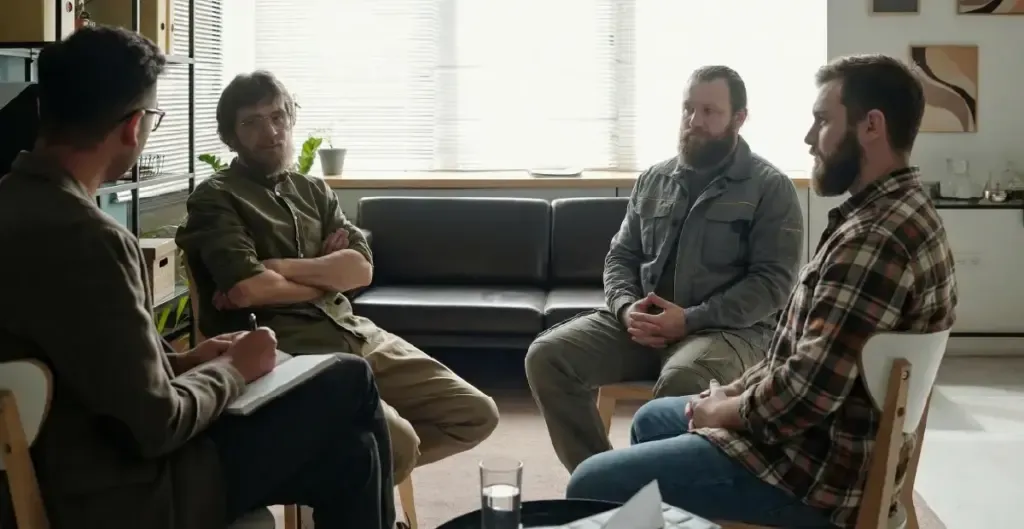
In Christian-based recovery programs, healing doesn’t happen in isolation. It happens in fellowship—men showing up for one another, being honest about their struggles, and learning how to carry burdens together.
This kind of environment reflects the heart of Scripture: transformation through relationship. When men step into group therapy or Bible study rooted in faith, they begin to see that they’re not alone and, more importantly, not beyond redemption.
Why Community Support Is Essential for Lasting Recovery
Recovery is rarely successful in isolation. Across both clinical research and real-world experience, one pattern emerges consistently: people who engage in supportive communities, whether through group therapy, peer-led programs, or structured recovery models, tend to achieve stronger, more sustained outcomes than those who try to recover alone [1].
Such communities provide structure, accountability, and a sense of belonging—three factors that directly impact long-term recovery success. Instead of relying solely on willpower, individuals gain access to shared experiences, practical coping strategies, and ongoing support during high-risk moments.
Common Community-Based Approaches to Addiction Recovery [2][3]:
| Approach |
How it Works |
Key Benefit |
| 12-Step Programs |
Peer-led groups follow structured steps (e.g., accountability, amends, support). Often includes sponsorship and regular meetings. |
~42% abstinence at 1 year; up to 50–70% with consistent participation |
| Group Therapy |
Clinically led sessions using methods like CBT, trauma-informed care, and relapse prevention in a group setting. |
Comparable to individual therapy, improved engagement and retention |
| Peer Support Groups |
Informal or semi-structured groups focused on shared experiences, mentorship, and encouragement. |
Linked to reduced relapse rates and improved long-term outcomes |
| Hybrid Models |
Combines clinical treatment (therapy) with peer support (e.g., 12-step + counseling). |
Often produces the strongest outcomes when combined |
How Brotherhood and Accountability Help Men Heal Together
For many men, especially those who have spent years masking pain with anger or control, learning to be open in a group setting is uncomfortable at first. But over time, something powerful happens.
As they speak honestly and are met with understanding instead of rejection, shame begins to lose its grip. In its place, trust is built. Brotherhood forms. And that brotherhood becomes a steady support system—one that challenges them to grow, stay accountable, and lead differently.
The Role of Faith in Building Strong Recovery Communities
For many men in recovery, the problem isn’t just being physically dependent on drugs or alcohol; it’s also shame, anger that hasn’t been dealt with, and a deep sense of loneliness. A faith-based recovery community doesn’t judge but encourages vulnerability, honesty, grace, and accountability to truly heal.
Faith also gives recovery a deeper purpose. It’s not just about getting sober; it’s about becoming whole. And restoring what was broken: marriages, families, integrity, and self-respect. Men begin to take care of their bodies again, to steward their strength, and to see their role not just as individuals in recovery but as leaders in their homes and communities.
What Does the Bible Say About Community Rehabilitation?
The Bible may not use the modern phrase “community rehabilitation,” but its message is deeply rooted in the idea that people are restored through relationships, accountability, and shared faith. From beginning to end, Scripture points to the reality that lasting transformation doesn’t happen alone.
God designed us for connection. When men try to carry addiction, anger, or past wounds by themselves, those struggles tend to grow behind the scenes. This is why confession and accountability are so central in both biblical teaching and recovery work. The act of opening up and of being known breaks the cycle of shame and replaces isolation with brotherhood.
In a Christ-centered recovery setting, men aren’t just encouraged to “do better”; they’re invited to be transformed from the inside out, with other men walking alongside them. The Bible also shows us that God often works through groups instead of just one person.
People grow in community, whether it’s disciples walking with Jesus, early believers gathering, or men sharpening one another’s minds. It’s good to have others on the same path who challenge, support, and encourage you.
5 Bible Verses That Support Community-Based Healing
- James 5:16: “Therefore, confess your sins to each other and pray for each other so that you may be healed.
- Galatians 6:2: “Carry each other’s burdens, and in this way you will fulfill the law of Christ.
- Proverbs 27:17: “As iron sharpens iron, so one person sharpens another.
- Hebrews 10:24–25: “Let us consider how we may spur one another on toward love and good deeds, not giving up meeting together.
- Ecclesiastes 4:9–10: “Two are better than one… If either of them falls down, one can help the other up.”
Christian Rehab for Men: Find Strength in Transformation
AnchorPoint Recovery in Arizona is a Christian rehab rooted in neuroscience and guided by the NeuroFaith® model as developed by Dr. Jeffrey Hansen, PhD. It uses faith and evidence-based therapies to treat trauma and addiction. We offer several levels of care to guide patients through their recovery journey from start to finish.
Although treatment plans are tailored to each individual’s needs, AnchorPoint follows a unified therapeutic framework—much like the AA model—that emphasizes surrender, accountability, and connection to a higher purpose.
By helping men move beyond self-reliance and isolation, we guide them toward healing that integrates brain science with faith, restoring meaning, identity, and hope beyond addiction.
We work with a variety of insurance plans and are committed to reducing financial barriers to care.
Sources
[1] Humphreys, K. et al. (2020). Alcoholics Anonymous and 12-Step Facilitation Treatments for Alcohol Use Disorder: A Distillation of a 2020 Cochrane Review for Clinicians and Policy Makers. Alcohol and alcoholism (Oxford, Oxfordshire), 55(6), 641–651.
[2] Kelly, J. 2020. New Cochrane Review finds Alcoholics Anonymous and 12-Step Facilitation programs help people to recover from alcohol problems. Cochrane.
[3] Day, E. et al. 2025. Recovery support services as part of the continuum of care for alcohol or drug use disorders.