(928) 377-5230

Terry A. Vaughan, M.D., F.A.P.A.
Medical Director
Dr. Terry Vaughan is a physician specializing in psychiatry who has over 20 years of experience treating psychiatric and addiction patients in Prescott, Arizona. She graduated with her medical degree (M.D.) from Indiana University School of Medicine in 1993. Afterwards she began her internship in internal medicine at St. Vincent’s Hospital and completed her psychiatry residency in 1997 at Indiana/Purdue University.
She began her career as Medical Director of a geriatric inpatient psychiatric unit and outpatient clinic with Tenet Hospital Corporation in Crawfordsville, Indiana. Starting in 1999 Dr. Vaughan moved to West Yavapai Guidance Clinic in Prescott where she was promoted to medical director and supervised a medical staff of 16 physicians and mid-level practitioners over her tenure of 10 years at the clinic.
She started her private practice, Psychiatric Services Of Prescott in the year 2010 and has been seeing private patients in her office while consulting with and treating patients in residential treatment centers over the last 10 years.
Dr. Vaughan has also served as medical director of an inpatient detoxification center and has significant experience in treating withdrawal and medication assisted management of addictions, including certification for treatment with Suboxone.
Dr. Vaughan has experience in treatment of dementia, major depressive disorder, bipolar disorder as well as anxiety disorders, substance dependence, process addictions, gambling disorders, attention deficit hyperactivity disorder, obsessive compulsive disorder, developmental disabilities and neurocognitive dysfunction due to traumatic brain injury, autism spectrum disorders as well as psychotic disorders.
Dr. Vaughan has passed board-certification testing in general psychiatry and works with both adults and adolescents. She is a member of the American Psychiatric Association and is a fellow of the APA. One of her greatest honors was being selected as one of the country’s exemplary psychiatrists in 2009 by the national alliance for mentally ill (NAMI).











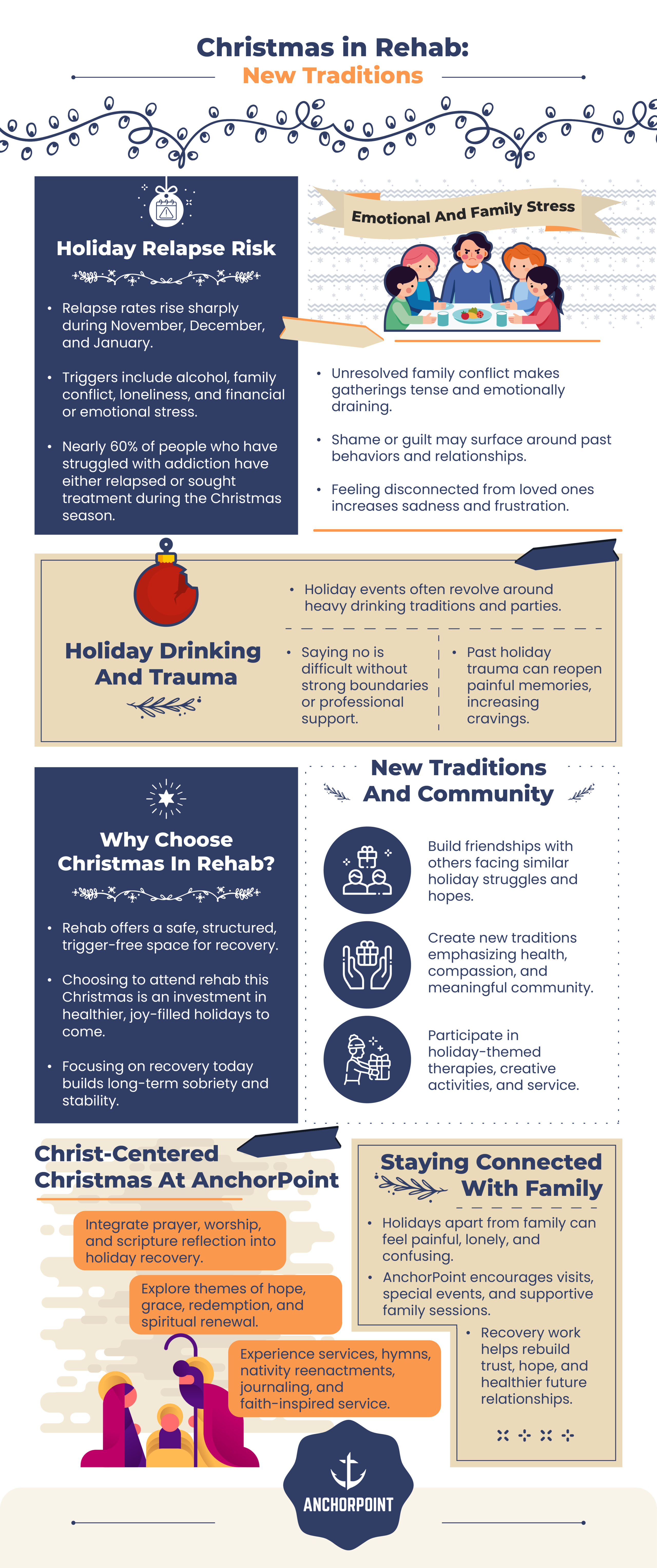
Some research estimates that nearly 60% of people who have undergone addiction treatment relapse have either relapsed or sought treatment during the Christmas holiday season [1].
The combination of social gatherings, emotional or financial stress, unstable family dynamics, or isolation causes many individuals to retreat into feelings of isolation, sadness, and for some, straight to the bottom of a liquor bottle or glass of Egg Nog.
This is where Christmas in rehab can offer a unique opportunity to experience the holiday season in a supportive, structured environment focused on healing and recovery. Christmas in rehab blends therapeutic activities, community support, and helps clients create new holiday traditions that foster their health and long-term sobriety.
The Risks of Relapse During The Holidays
Let’s be real, for those struggling with addiction, trauma, family disconnection, and conflict with loved ones, Christmas is probably not the magical time of year that some paint it out to be. Data shows that relapse rates are high during this time of year, with alcohol relapse rates in particular increasing by nearly 150% in the holiday months of November, December, and January [2].
Christmas can be one of the most triggering times of year. Whether you’re tempted by easily available liquor and fun holiday cocktails, triggered by family dynamics, or feeling lonely, the holiday season can be rough for those who do not have a solid support system or coping tools in place
Below are several reasons why relapse rates are higher during the holiday season [1]:
- Unstable Family Relationships: Unresolved conflicts, shame, or guilt can make family gatherings difficult or triggering. Arguments or emotional tension with loved ones may increase the risk of turning back to alcohol or drugs as a coping mechanism.
- Isolation: Those without any family or a supportive social network may spend the holiday season with higher rates of loneliness, isolation, and feelings of depression.
- Drinking Norms: The holidays often revolve around heavy drinking on Christmas Eve, Christmas Day, and New Year’s. Saying no and maintaining boundaries can be challenging without professional support. Rehab offers a safe, pressure-free environment to recover without these social triggers.
- Investing in Future Holidays: Choosing rehab now might feel like sacrificing this Christmas, but it is an investment in many healthier, joy-filled holidays to come. Early commitment to recovery sets a foundation for lifelong sobriety and meaningful celebrations ahead.
- Holiday Trauma: For some, Christmas is not a magical time of year. The holidays can reopen old wounds or bring up painful memories, especially if past experiences were traumatic. This emotional distress can increase cravings, and a supportive rehab can help you repair this relationship with the holidays.
The Benefits of Spending Christmas in Rehab
Spending Christmas in rehab might feel like a sacrifice, especially if you have kids, a spouse, or are active in your community during the holidays. But think of it as a trade-off, Christmas in rehab is an opportunity to focus on yourself, and by dedicating this time to recovery, you’re giving yourself and your loved ones the gifts of future Christmases together.
Some of the benefits of spending Christmas in rehab and focusing on recovery include:
- Trigger-free environment: Safe, supervised, and structured environment, providing a space to focus fully on overcoming addiction without distractions.
- Friendship and Community: Form bonds with other individuals in treatment who are facing similar holiday distress. Spending Christmas with others in recovery can spark deep, meaningful connections that last beyond initial treatment.
- New Tradition: Spending Christmas in rehab can encourage new traditions and help you focus on the true meaning of holiday spirit beyond materialism, such as health, compassion, and community.
- Deeper Connection to Christ: Christian or faith-based rehabs encourage spiritual growth during Christmas by creating opportunities for clients to participate in faith-centered holiday traditions such as nativity reenactments, Christmas devotionals, and worship music nights. This focus helps residents find hope, grace, and renewal, deepening their relationship with Christ and strengthening their recovery foundation during the holidays.
Christmas Activities and Traditions in Traditional Rehabs
Traditional rehabs try to offer holiday activities that accommodate all clients regardless of their faith. These may be specifically centered on Christmas or focus on larger themes such as community, connection, and personal growth during the holiday season. Some activities to expect in rehab at Christmas time include:
- Preparing and eating holiday meals with healthy, comforting food.
- Gift exchanges or Secret Santa among patients and staff.
- Holiday-themed therapy sessions focused on specific triggers that arise during this time of the year.
- Christmas activities such as carolling, baking cookies, or making ornaments.
- Community service projects and volunteering with local food kitchens, or making holiday cards for service men overseas.
- Movie nights featuring Christmas classics such as Home Alone, Elf, Miracle on 34th Street, or National Lampoon’s Christmas Vacation.
How Faith Shapes the Christmas Experience in Rehab at AnchorPoint Recovery
At AnchorPoint Recovery, the Christmas experience in rehab is deeply intertwined with the life and teachings of Jesus Christ, offering faithful Christians a spiritual foundation for recovery during the holiday season.
Beyond traditional holiday activities, we encourage a Christ-centered approach to healing that integrates prayer, worship, scripture reflection, and the transformative power of God’s strength. We support you in embracing the true meaning of Christmas, focusing on concepts such as hope, grace, and renewal. Some activities to expect at AnchorPoint Recovery during Christmas include:
- Prayer services or devotional gatherings centered on Christmas.
- Reading and reflecting on Bible passages related to hope, redemption, and the birth of Christ.
- Worship music nights featuring Christmas hymns and spiritual songs.
- Candlelight services symbolize light overcoming darkness.
- Group discussions on the spiritual meaning of Christmas and recovery.
- Celebrations of the birth of Jesus with nativity scenes or reenactments.
- Fellowship meals with prayers of gratitude and blessing.
- Faith-based holiday journaling or gratitude exercises.
- Acts of service or outreach inspired by Christian teachings on charity.
- Personal testimony sharing about faith and transformation during the holiday season.
Embracing Recovery During The Holidays at AnchorPoint Recovery
We understand that the holidays can be especially challenging when you’re separated from your wife, kids, and loved ones, it might even feel counterintuitive to recovering from addiction. But it’s important to remember: Every Christmas you are not in treatment, you are alone.
We encourage and facilitate family engagement through special events, visits, and support sessions designed to strengthen relationships while supporting your recovery journey during the holiday season.
Our approach creates a Christ-centered environment where you can focus on your recovery without losing the connection to those you love most. AnchorPoint Recovery helps rebuild trust and fosters hope, making the holiday season a powerful time for both personal growth and family healing.
Contact our admissions team today!
Sources
[1] Coping with Substance Use Disorder during the Holidays. 2020. National Institute on Drug Abuse.
[2] Royzner, G. et al. (2023). Habits and Routines of Adults in Early Recovery From Substance Use Disorder: Clinical and Research Implications From a Mixed Methodology Exploratory Study. Substance abuse: research and treatment, 17, 11782218231153843.