(928) 377-5230

Tim Hayden
Co-Founder
Tim is passionate about serving others, leading people to Christ, and more specifically breaking the stigma of addiction and mental health in the Church and across the world. Tim merges his desire to further the Kingdom with 18 years of experience in the Corporate IT world where his background has ranged from working for small startups to leading national teams at global software companies. Tim graduated from Mount Vernon Nazarene University with a bachelor’s degree in Business Administration, Marketing, and Communications. Tim and his wife are active in their church community serving in the youth department, marriage mentoring, and life group mentoring. In his spare time, Tim enjoys spending time with his family in the great outdoors camping, mountain biking, and snowboarding.
“Do all the good you can, by all the means you can, in all the ways you can, in all the places you can, at all the times you can, to all the people you can, as long as ever you can.” – John Wesley











Adventure therapy is one of the most effective and underutilized approaches available for veterans dealing with PTSD. It’s also one of the most natural fits for men who’ve built their identity around action, mission, and teamwork.
For a lot of veterans, the idea of sitting across from a therapist and talking about what they’ve been through doesn’t feel like healing. It feels like exposure without cover. And for men who spent years in environments where emotional vulnerability could get them or someone else killed, that instinct makes complete sense.
That doesn’t mean treatment can’t work. It means the right kind of treatment has to meet veterans where they are, which is often not in a clinical office.
What Is Adventure Therapy?
Adventure therapy uses purposeful outdoor activities and challenge-based experiences as the vehicle for therapeutic change. It’s not recreation. It’s not just “getting some fresh air.” It’s a structured, clinically grounded approach that uses the natural environment and physical challenge to access and process what talk therapy alone often can’t reach.
The idea is straightforward: trauma lives in the body. PTSD isn’t just a thought pattern; it’s a state of nervous system dysregulation that shows up in the body as hypervigilance, reactivity, shutdown, and disconnection. Sitting still and talking about trauma can reinforce those patterns. Moving through a physical challenge in nature can interrupt them [1].
What Does Adventure Therapy Actually Look Like?
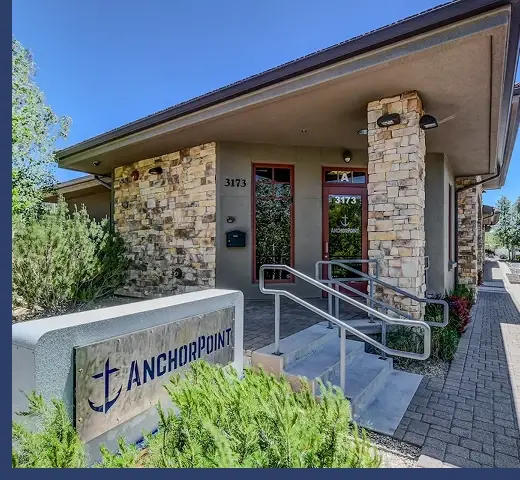
At AnchorPoint, adventure therapy is woven into how treatment works. The high desert landscape around Prescott, Arizona, with open sky, rugged terrain, and canyon trails, isn’t just a backdrop. It’s part of the treatment itself.
-
Hiking and wilderness exposure: Getting men out into the landscape, moving their bodies, breathing real air, and navigating real terrain. There’s something that resets in a man’s nervous system when he’s out in open country that no clinical setting can replicate.
-
Equine-assisted therapy with donkeys: Working with animals, specifically the donkeys at AnchorPoint, requires presence, patience, and genuine attunement. Donkeys don’t respond to performance or posturing. They respond to regulation. For veterans whose nervous systems have been in a survival state for years, learning to calm an animal by first calming themselves is one of the most direct paths to nervous system regulation available.
-
Team-based outdoor challenges: Physical training and group challenges that mirror the structure veterans already know—mission, team, accountability—but redirect that structure toward internal growth rather than external threat.
How Does Adventure Therapy Help With Trauma and PTSD?
PTSD keeps the body stuck in a state of threat response, with the sympathetic nervous system running hot and always scanning for danger. Time in nature activates the parasympathetic nervous system: the rest, recovery, and connection state.
A 2022 study found that structured outdoor challenge programs reduced cortisol reactivity by 23% over eight weeks compared to control groups. Veterans who participated in multi-day wilderness programs have reported nearly a 29% reduction in PTSD symptoms at three-month follow-up [2].
Adventure therapy also gets trauma out of the head and into the body, where it can be moved through. Physical challenge, sensory engagement with the natural environment, and real-time regulation practice engage trauma pathways that verbal therapy alone doesn’t access [3].
Adventure therapy also promotes brotherhood and trust. Isolation is one of PTSD’s most devastating effects. It convinces men they’re fundamentally different from everyone around them and that no one can understand what they’ve been through. The shared challenge of adventure therapy rebuilds what isolation takes away. Working through something hard alongside other men who’ve served creates a connection that doesn’t need explanation; that bond is therapeutic in itself.
Why This Matters Specifically for Veterans
Veterans with PTSD often resist traditional treatment, not because they don’t want to heal, but because the format doesn’t match who they are. Engagement in treatment that feels passive, clinical, or emotionally pressured tends to have higher rates of dropout. Engagement in treatment that requires effort, yields real results, and occurs alongside other men often supports long-term recovery efforts [4].
Adventure therapy speaks the language many veterans already understand: physical challenge, mission, and team. It creates the conditions for emotional processing without requiring it to happen in a way that feels threatening or foreign.
Many of the men who come to AnchorPoint are carrying decades of unprocessed trauma from combat, moral injury, and loss, often layered on top of substance use and experiences that predate their service. Adventure therapy doesn’t replace the deeper clinical work of EMDR or trauma-focused therapy; it accelerates it. When a man’s nervous system is more regulated from time outdoors, he’s more available for the internal work.
Adventure Therapy for Men in Arizona
AnchorPoint is a men’s residential program in Prescott, Arizona, built specifically for men who’ve been through things most people don’t have words for. We combine evidence-based clinical modalities, including EMDR, CBT, IFS, and HeartMath™ biofeedback, with the physical environment and the kind of community that creates real accountability.
If you’re a veteran who’s tried mental health treatment before and found it didn’t fit, or if you’ve been white-knuckling it alone because nothing felt right, we want to talk. The mission isn’t over. It just looks different now.
Reach out to our team today to learn more about our admissions process and how our unique approach can support your recovery.
Sources
[1] National Center for PTSD, et al. (2023). PTSD basics. U.S. Department of Veterans Affairs.
[2] Bettmann, J. E., et al. (2022). Mental health outcomes of peer-led therapeutic adventure for military veterans. Journal of Experiential Education.
[3] DiGiovanna, A. T., et al. (2025). Veterans report enhanced openness to mental health treatment following wilderness therapy. Ecopsychology.
[4] Poulsen, D. V., et al. (2015). Nature-based therapy as a treatment for veterans with PTSD: What do we know? Journal of Public Mental Health.