
Our Approach to Residential Treatment for Men
How AnchorPoint treats addiction in men: the NeuroFaith® model, Christ-centered care, the therapies we use, the Resilience Lab and the outdoors, all in one residential program.
- The NeuroFaith® model
- Christ-centered
- Built for men
Licenses and accreditations



Thank you. We got it.
Admissions will call you back soon. Need us now? (928) 377-5230
What is the NeuroFaith® model of addiction treatment?
NeuroFaith® is the model that shapes how care is delivered at AnchorPoint. It puts three things into one plan of care: what neuroscience shows about trauma and the brain, clinical therapy such as EMDR, CBT and DBT, and Christian faith.
The model began as a book, NeuroFaith®, written by Dr. Jeffrey Hansen, PhD, with Tim Hayden, now AnchorPoint’s CEO, and Pastor Earl Heverly. It rests on the idea that trauma and addiction are held not only in conscious thought but in the nervous system itself, so recovery has to reach the body, the mind and the spirit.
Here it works as a practical framework. It guides the relationship with your therapist, how your treatment plan is built, how groups run and how faith is part of the work in a way that stays careful with trauma. You can read more in our post on integrating Christianity and mental health.
Addiction is a response, not a moral failure
Using often starts as a way to survive pain, trauma or stress. Seeing it that way lets the work start from honesty instead of shame.
Trauma lives in the nervous system
Trauma is held in the body as well as in memory, so treatment works on regulation and on feeling safe, with body work like strength training beside therapy.
Safety and consistency come first
Steady relationships with staff and a predictable, structured day help a man settle enough to do the hard work.
Transformation is the goal
The aim reaches past sobriety: restoring identity and rebuilding relationships with God, with yourself and with the people you love.
What Christ-centered treatment looks like at AnchorPoint
Every part of the program rests on a Christ-centered foundation. The goal is transformation, not only sobriety or relief from symptoms. Men are encouraged to surrender old wounds, take ownership of their story and build a life of purpose.
Faith shows up in the week in practical ways. Bible study groups, prayer and fellowship sit alongside group therapy, one-on-one therapy and 12-step meetings. Brotherhood carries a lot of it: the men in the house encourage each other and hold each other accountable.
Whether your faith is strong, shaken or not there at all, you are welcome here. Men of any faith, or none, come to AnchorPoint, and therapy, groups, 12-step meetings, the gym and the outdoors are the same for every man in the house.
Video testimonials
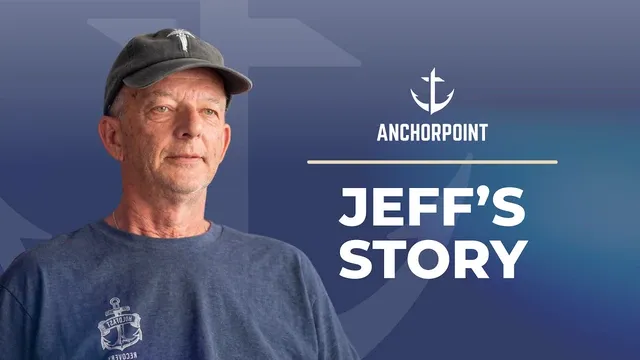
Jeff's story
40 years of marriage, restored.
“You're never too far from help. Trust the process, and the faith will grow.”
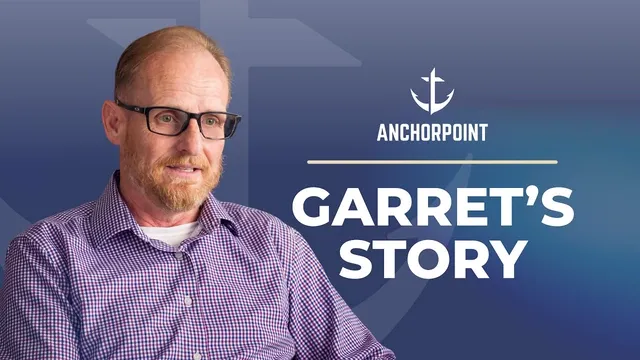
Garret's story
From rock bottom to honest again.
“God loves you no matter what, even when you're incapable of loving yourself.”
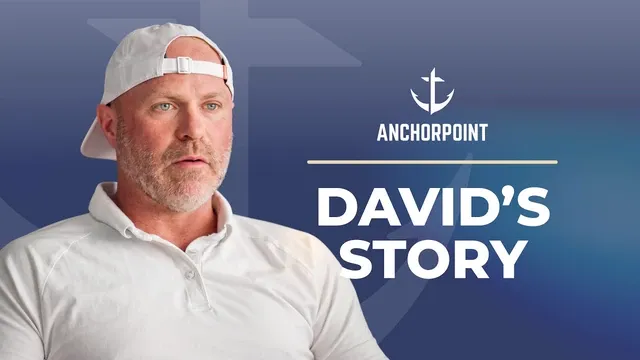
David's story
He picked up the phone, and everyone rallied.
“AnchorPoint taught me I'm not alone.”
Therapies used in addiction treatment for men
Each man has his own therapist and a treatment plan built around him. These are the therapies that plan draws on, and your team works out with you which ones fit.
One-on-one therapy
Sessions with your own therapist, where your treatment plan is built and the hardest things get worked through.
Group therapy
Groups with the men in the house. Hearing your story in another man’s is often where change starts.
EMDR
Eye movement desensitization and reprocessing targets the impact of trauma by working through painful memories in a structured way.
CBT
Cognitive behavioral therapy helps you spot the thinking patterns behind using and practice healthier ways to cope.
DBT
Dialectical behavior therapy builds skills for strong emotions, distress and relationships, so you have something to reach for besides a drink or a drug.
Internal Family Systems (IFS)
IFS looks at the parts of you shaped by trauma as protective responses rather than flaws, which helps men move past guilt and shame.
Polyvagal informed therapy
You learn to recognize when your nervous system is in fight, flight or freeze, and how to bring it back to a sense of safety.
HeartMath
Breathing and heart focused exercises for managing stress and emotion in the moment, a skill you keep using at home.
Sociometrics
Experiential group exercises that build trust and connection between the men, and show how each man relates and belongs.
Family therapy
Attachment based work with spouses, children and parents, so the people at home are part of the recovery.
Art therapy
Creative work that gives you another way into what is hard to put into words.
12-step work
AA, NA or CA meetings are part of the program for every man, and something you can keep going to wherever you live.
Medical and psychiatric care runs alongside therapy, with our medical director, a psychiatric nurse practitioner and 24/7 nursing. Dual diagnosis care treats addiction and mental health in the same plan.
Men’s rehab insurance coverage
Admissions checks your benefits for free, in or out of network, and tells you plainly what your plan covers before you decide anything.


 In network






Most PPO plans work out of network too. On Medicare or Medicaid (AHCCCS)? Admissions can help you find a program that takes your plan.
Check your insurance
The Resilience Lab: strength training in recovery
The Resilience Lab is where men build physical and mental resilience alongside the clinical work. It is led byBobby Figueroa, Director of Resilience, who served 20 years in the U.S. Army, much of that time in Special Forces. The Lab is at Holdfast Recovery, our brother program, and men at AnchorPoint go there to use it as part of their programming.
- Fitness Room. Strength training, calisthenics and movement, starting with technique rather than load.
- Recovery Room. Red-light therapy, vibration plates, a cold plunge, an infrared sauna and a dry sauna.
Recovery Room sessions are optional, introduced gradually and cleared with your care team first. The Lab complements clinical, counseling and spiritual care rather than replacing it.
The Resilience LabAdventure and outdoor therapy for men
Time outside is part of every week, from the first one. Hiking, the gym, ground work with horses and outings off site are all led by staff, and you start at your own level. What comes up out there, the hill you wanted to quit on or the horse that would not move, gets talked through in group back at the house.

How residential treatment at AnchorPoint comes together
- Step 1
Call admissions
A free, confidential call and a free benefits check.
- Step 2
Detox first, elsewhere
If you need detox, it comes first. Then we pick you up.
- Step 3
Your assessment and plan
Your team learns your history and builds your plan with you.
- Step 4
A planned next step
Every man leaves with his next step already in place.
Reviews from men at AnchorPoint
- Brett H.May 2026
“Anchor Point Recovery helped me through one of the hardest times in my life. The staff treated me like a real person, not just another client, and that made a huge difference. Everyone was supportive, easy to talk to, and genuinely cared about my progress. The environment felt safe and positive, and I always felt like people wanted to see me do better. I’m really grateful for the experience and would absolutely recommend them to anyone needing help.”
- Jacoury H.September 2026
“First, I would like to express my appreciation and gratitude for all staff involved in my recovery here at Anchor Point! I didn’t feel like a client but more like extended family that ofcoarse had my best interest at heart! Allowing my faith to freely be apart of my process was a vital part and again I’m grateful!”
- John B.June 2026
“Anchor Point is a faith based recovery program that does an amazing job helping addicts and those with mental health concerns over come their issues. If you want to strengthen your relationship with God and get help, I recommend Anchor Point. It is great program. The facility is clean and comfortable. The staff are caring and helpful. The therapists are top notch.”
Complete five-star reviews from AnchorPoint's Google Business Profile, in each reviewer's own words. Experiences vary. Hover to pause.
Thank you. We got it.
Admissions will call you back soon. Need us now? (928) 377-5230
Our approach FAQ
- NeuroFaith® is the clinical model behind treatment at AnchorPoint. It brings together the neuroscience of trauma, clinical therapy such as EMDR, CBT and DBT, and Christian faith in one plan of care. It began as a book written by Dr. Jeffrey Hansen, PhD, Tim Hayden and Pastor Earl Heverly.
- AnchorPoint is Christ-centered, and men of any faith, or none, are welcome. Bible study groups are there for men who want them. Therapy, groups, 12-step meetings, the gym and the outdoors are the same for every man in the house.
- They run side by side. Licensed clinicians lead the therapy, the medical team handles medical and psychiatric care, and faith is part of the same week through Bible study, prayer and fellowship. The NeuroFaith® model is what ties them into one plan.
- Yes. 12-step participation in AA, NA or CA is part of the program for every man at AnchorPoint. Meetings sit alongside therapy, groups and the outdoors, and they are something you can keep going to once you are home.
- The Resilience Lab is at Holdfast Recovery, our brother program in Arizona. Men at AnchorPoint go there to use it as part of their programming, with Bobby Figueroa, Director of Resilience, leading the training.
- Hiking in the pines and granite around the house, training in the gym, ground work with horses and outings off site. Staff lead every activity, you start at your own level, and what comes up outside gets talked through in group back at the house.adventure therapy
Where to find us
- AnchorPoint Recovery
3173 Clearwater Dr
Prescott, AZ 86305 - (928) 377-5230
Admissions: open 24 hours
Family visits: SundaysFlying in? Land in Phoenix and admissions handles the pickup.