(928) 377-5230

Tim Hayden
Co-Founder
Tim is passionate about serving others, leading people to Christ, and more specifically breaking the stigma of addiction and mental health in the Church and across the world. Tim merges his desire to further the Kingdom with 18 years of experience in the Corporate IT world where his background has ranged from working for small startups to leading national teams at global software companies. Tim graduated from Mount Vernon Nazarene University with a bachelor’s degree in Business Administration, Marketing, and Communications. Tim and his wife are active in their church community serving in the youth department, marriage mentoring, and life group mentoring. In his spare time, Tim enjoys spending time with his family in the great outdoors camping, mountain biking, and snowboarding.
“Do all the good you can, by all the means you can, in all the ways you can, in all the places you can, at all the times you can, to all the people you can, as long as ever you can.” – John Wesley











Aetna is one of the largest health insurers in the country. Many of its plans include coverage for addiction treatment because federal law requires most insurers to treat substance use care similarly to physical health care.
What your specific plan actually pays for depends on your policy, your deductible, and which providers you use.
What Is Aetna, and How Does Health Insurance Actually Work?
Aetna is a health insurance company that sells plans directly to individuals, through employers, and through Medicare and Medicaid programs across the country, including in Arizona. The basic idea behind insurance is simple, even when the paperwork is not: you pay a monthly premium to keep your plan active, and the plan then shares the cost of your care once you start using it.
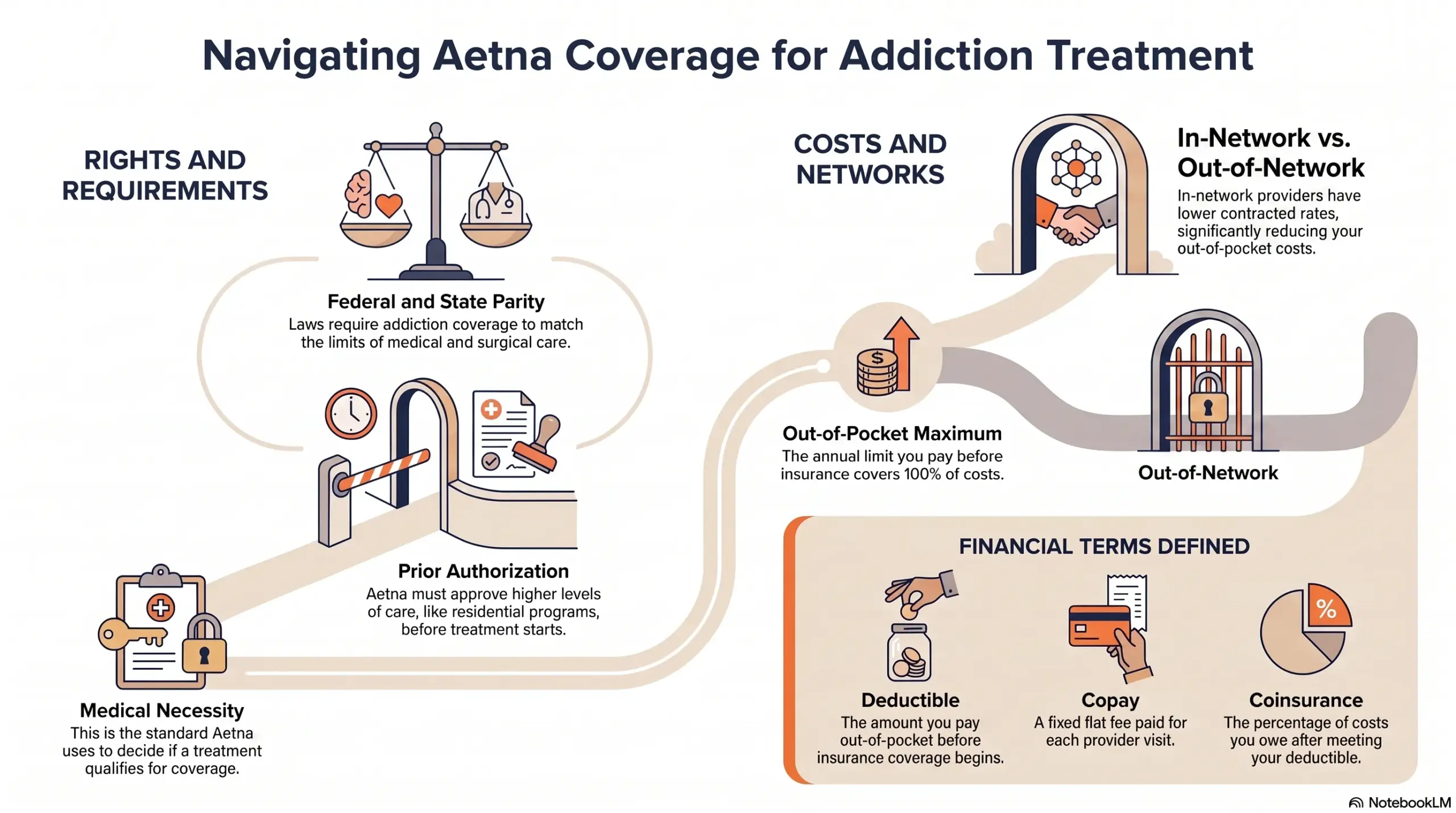
A deductible is the amount you pay out of pocket before Aetna starts covering costs, a copay is a flat fee you pay per visit, and coinsurance is the percentage you still owe after your deductible is met [1]. Knowing these three words alone makes most insurance conversations easier to follow.
 Does Aetna Cover Addiction Treatment?
In most cases, yes. Federal law, specifically the Mental Health Parity and Addiction Equity Act, requires many health plans to cover substance use disorder treatment with the same limits and costs that apply to medical and surgical care, rather than singling it out for stricter rules [2].
Arizona has its own version of this protection as well, giving the state’s Department of Insurance and Financial Institutions direct authority to enforce parity for plans sold here [3]. This does not mean that every Aetna plan automatically covers every type of treatment. Coverage still depends on your specific plan, whether a facility is in-network, and whether a level of care, such as residential treatment, requires prior authorization.
What Insurance Terms Do You Need to Know Before You Call?
You do not need to memorize an entire glossary, but a few terms come up constantly.
- In-network means a provider has a contract with Aetna and agreed-upon rates, which usually means lower costs for you.
- Out-of-network means the provider has no such agreement, which can mean higher costs or no coverage at all.
- Prior authorization is Aetna’s approval process for a specific treatment before it starts, common for higher levels of care such as residential or inpatient programs.
- Medical necessity is the standard Aetna uses to decide whether a treatment qualifies for coverage in the first place.
- Your out-of-pocket maximum is the most you will pay in a plan year before Aetna covers 100 percent of covered costs, which matters if treatment stretches on for weeks or months.
What Affects How Much Aetna Covers in Arizona?
A few factors decide the real dollar amount, not just whether coverage exists. These include:
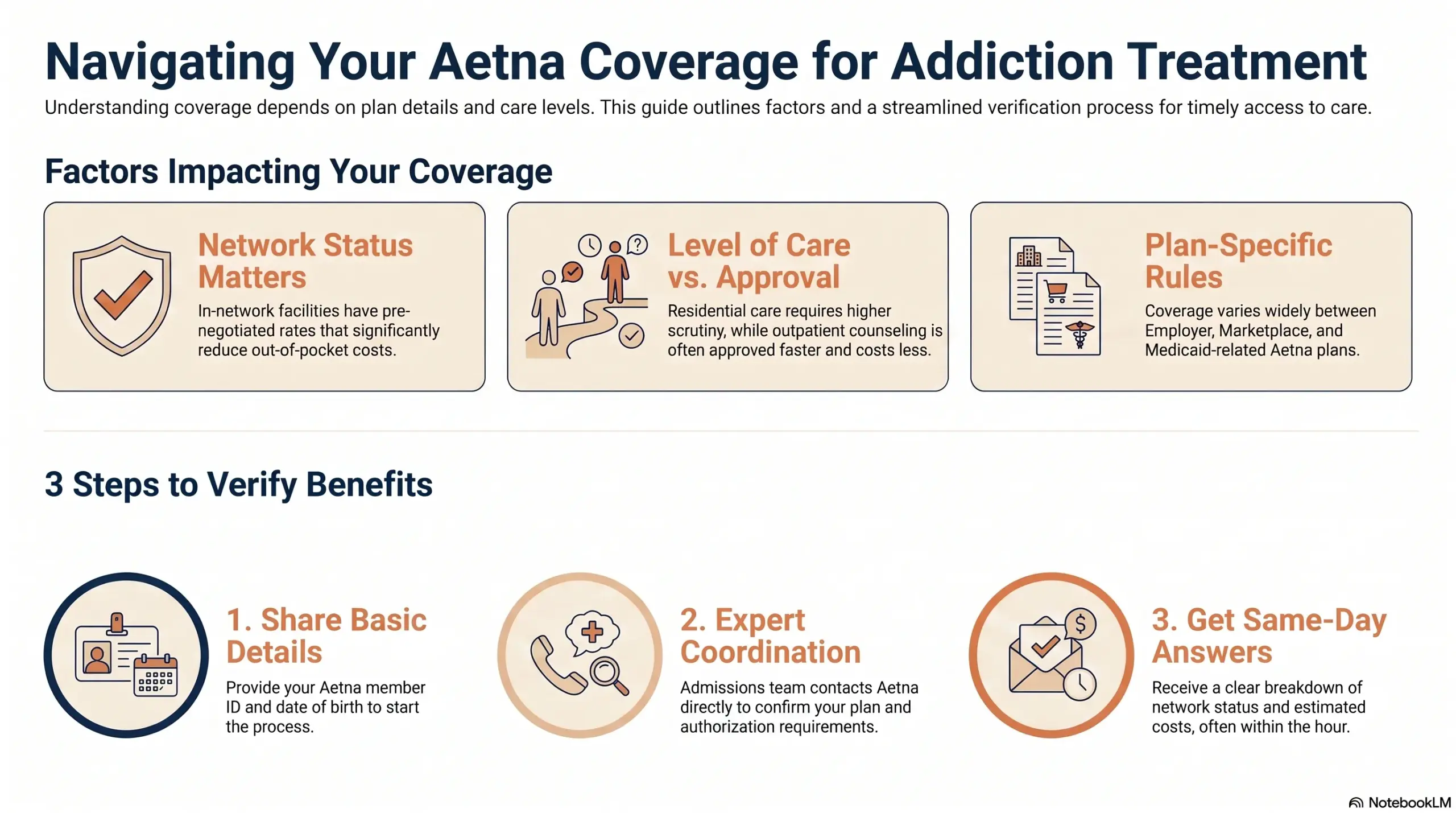
- Whether the treatment center is in Aetna’s network matters most, since in-network facilities have already agreed to specific rates and billing practices.
- The level of care matters too. Detox and residential treatment involve round-the-clock support and tend to draw the most scrutiny for prior authorization, while outpatient counseling is usually approved faster and costs less per visit.
- Your specific plan matters as well, since an employer plan, a Marketplace plan, and a Medicaid-related plan can all carry different rules under the same Aetna name.
Aetna states that behavioral health and substance use claims are reviewed for medical necessity at rates comparable to medical and surgical claims [4].
 How Do You Find Out What Your Aetna Plan Actually Covers?
The only reliable way to know for certain is to check your specific plan, since “Aetna covers addiction treatment” is true in general but not detailed enough to plan around.
Call the member services number on the back of your insurance card, or log into your Aetna member portal, and ask directly whether a program is in-network, whether prior authorization is required, and what your deductible and coinsurance will be for that level of care.
You do not have to do this part alone either, since most treatment centers will make the same calls on your behalf.
What Happens When You Verify Your Benefits at AnchorPoint?
Verifying benefits should not mean sitting on hold or decoding a benefits letter alone. At AnchorPoint, the process is built to remove that friction:
- Share your Aetna member ID and date of birth.
- The admissions team contacts Aetna directly to check your specific plan and level of care.
- You get a clear answer covering what is in-network, what needs prior authorization, and roughly what you can expect to pay out of pocket.
- You decide what comes next, with no pressure and no obligation to enroll.
Most families get a clear answer the same day they reach out, often within the hour. Insurance can be the most confusing part of getting help, but it does not have to be the reason help gets delayed. Reach out to AnchorPoint to find out exactly what your Aetna plan covers, with no obligation.
Sources
| [1] | Aetna. Premiums, deductibles, coinsurance and copays explained. |
| [2] | Centers for Medicare and Medicaid Services. The Mental Health Parity and Addiction Equity Act (MHPAEA). |
| [3] | Arizona Department of Insurance and Financial Institutions. Mental health parity. |
| [4] | Aetna. Mental health parity FAQs for members. |